
The FDA refuses Moderna mRNA flu vaccine application, declining to formally review the company’s first seasonal influenza vaccine developed using mRNA technology. The decision marks a significant regulatory setback for Moderna and raises broader questions about the future of mRNA flu vaccine development in the United States.
According to the company, the agency issued a “refuse-to-file” letter stating that the submission did not include what regulators consider an “adequate and well-controlled” clinical trial. However, Moderna emphasized that no safety or efficacy concerns were identified in the FDA’s response.
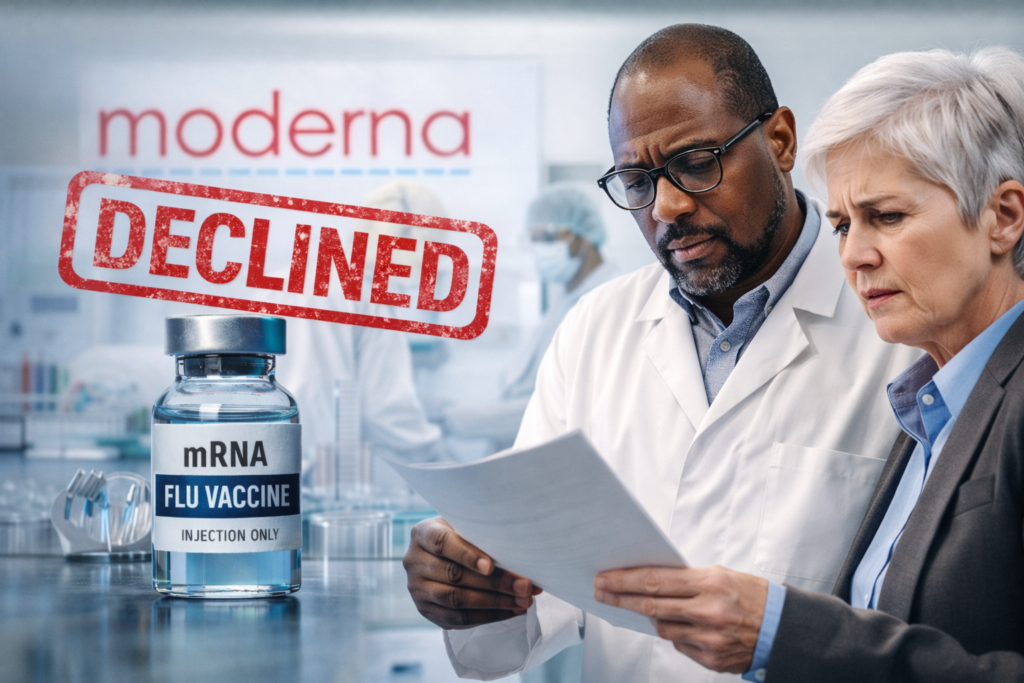
Why the FDA Refuses Moderna mRNA Flu Vaccine Application
The reason the FDA refuses Moderna mRNA flu vaccine application centers on the comparator used in the Phase 3 clinical trial.
Moderna conducted a large-scale study involving more than 40,000 participants, comparing its experimental mRNA flu vaccine to Fluarix, a standard-dose seasonal influenza vaccine. Federal regulators argued that, particularly for adults aged 65 and older, the appropriate comparison should have been against a CDC-recommended high-dose flu vaccine, which is considered the best available standard of care for seniors.
Health and Human Services officials stated that Moderna had received guidance in 2024 advising the company to use a high-dose comparator for older adults but did not fully align its primary control group with that recommendation.
“Refuse-to-file” letters are uncommon. A 2021 study reviewing nearly 2,500 FDA submissions found that only about 4% received such decisions.
Moderna Responds After FDA Refuses Moderna mRNA Flu Vaccine Application
After the FDA refuses Moderna mRNA flu vaccine application, company executives publicly disputed the agency’s position.
Moderna stated that regulators had reviewed and cleared the trial design before the study began approximately 18 months ago. The company also said that during meetings in August, FDA officials indicated that any concerns regarding the comparator vaccine could be evaluated during the review process.
Dr. Stephen Hoge, president of Moderna, described the decision as unexpected and confirmed that the company has requested a formal meeting with FDA officials to clarify next steps.
Sources familiar with the matter indicated that some career FDA staff members supported advancing the application. Ultimately, the refusal letter was signed by Dr. Vinay Prasad, director of the FDA’s Center for Biologics Evaluation and Research.
What It Means That the FDA Refuses Moderna mRNA Flu Vaccine Application
The fact that the FDA refuses Moderna mRNA flu vaccine application comes amid ongoing debate about mRNA technology in infectious disease prevention.
Moderna, along with Pfizer and Novavax, is one of the primary manufacturers of Covid-19 vaccines in the United States. Moderna and Pfizer use mRNA platforms, which gained global recognition during the Covid-19 pandemic due to their rapid development and manufacturing capabilities.
Moderna has argued that mRNA flu vaccines could improve seasonal effectiveness by allowing strain selection closer to flu season and enabling faster production timelines.
In results reported in June, Moderna said its mRNA flu vaccine demonstrated approximately 27% higher efficacy than Fluarix in adults aged 50 and older. A separate safety and immune-response trial included comparison with a high-dose flu vaccine for individuals aged 65 and older.
The company had planned to move forward with a combination flu and Covid-19 mRNA vaccine application in the United States. That timeline is now uncertain after the FDA refuses Moderna mRNA flu vaccine application.
Moderna expects regulatory decisions in Europe later this year.
Taken from CNN: FDA refuses to review Moderna’s application for mRNA flu vaccine, company says
Read More At: https://viralproductsreview.com
Learn More News: Why Losing Weight After 40 Is Hard And How to Make It Easier
About the Author